
Text workflow hygiene
Text workflow hygiene issues are rarely caused by wording. They are caused by transport. The same text can look clean in one tool, then break after copy-paste in another: wrapping fails, truncation triggers early on mobile, hashtags and mentions stop being recognized, and spacing becomes inconsistent across surfaces.
These failures are driven by invisible Unicode artifacts transported through rendering layers and clipboard representations. Each publishing surface interprets the same underlying structure differently, because each environment optimizes for its own layout constraints, tokenization rules, and performance requirements.
Three high-impact workflow checkpoints are introduced, their most common failure modes are mapped (paste instability, early truncation, broken token parsing, inconsistent spacing), and safe normalization patterns are provided for workflows where predictable behavior matters more than preserving invisible formatting rules.
What text workflow hygiene is
Text workflow hygiene is the practice of stabilizing text structure before it reaches strict publishing environments. Typical failures include paste instability, early truncation, wrapping refusal in narrow layouts, broken hashtags or mentions, and spacing shifts between preview and published rendering. These issues are structural rather than stylistic, which is why rewriting often fails to fix them.
The underlying cause is frequently invisible Unicode structure preserved through rendering and clipboard transport. Destination surfaces interpret that structure using their own layout and parsing rules, producing different outcomes across devices and contexts.
The three workflow checkpoints that matter most
1) Clipboard: the transport layer
The clipboard is the most fragile link in modern workflows. It can carry multiple representations of the same content and preserve invisible whitespace variants and control marks. That is why text can behave differently after paste across apps. The dedicated child page is Clipboard text cleaning.
2) Pre-publish: the last safe moment to stabilize structure
Publishing surfaces enforce parsing and layout constraints. Applying cleanup after publishing is reactive and costly. Cleaning before publishing standardizes the structure at the last step, when it is still easy to control. The dedicated child page is Clean text before publishing.
3) Normalization: a repeatable process at scale
Stable workflows require repeatability. A normalization workflow standardizes whitespace, removes unintended invisible boundaries, and preserves required Unicode behavior for emojis and multilingual text. The dedicated child page is Text normalization workflow.
Common symptoms
Most workflow hygiene issues surface as behavior failures: text that refuses to wrap, fields that truncate too early on mobile, hashtags and mentions that stop being recognized after paste, spacing that shifts between editor preview and published rendering, and content that behaves inconsistently across apps. These symptoms are amplified on mobile due to narrow layouts and aggressive truncation thresholds.
Why it happens
Text is typically produced outside the destination surface. It is rendered through formatting layers, transported through the clipboard, and pasted into a destination environment that parses text for features. Each layer can preserve or introduce invisible Unicode structure. Because this structure is hidden, the problem is often misdiagnosed as a platform bug or a styling issue.
What to do in practice
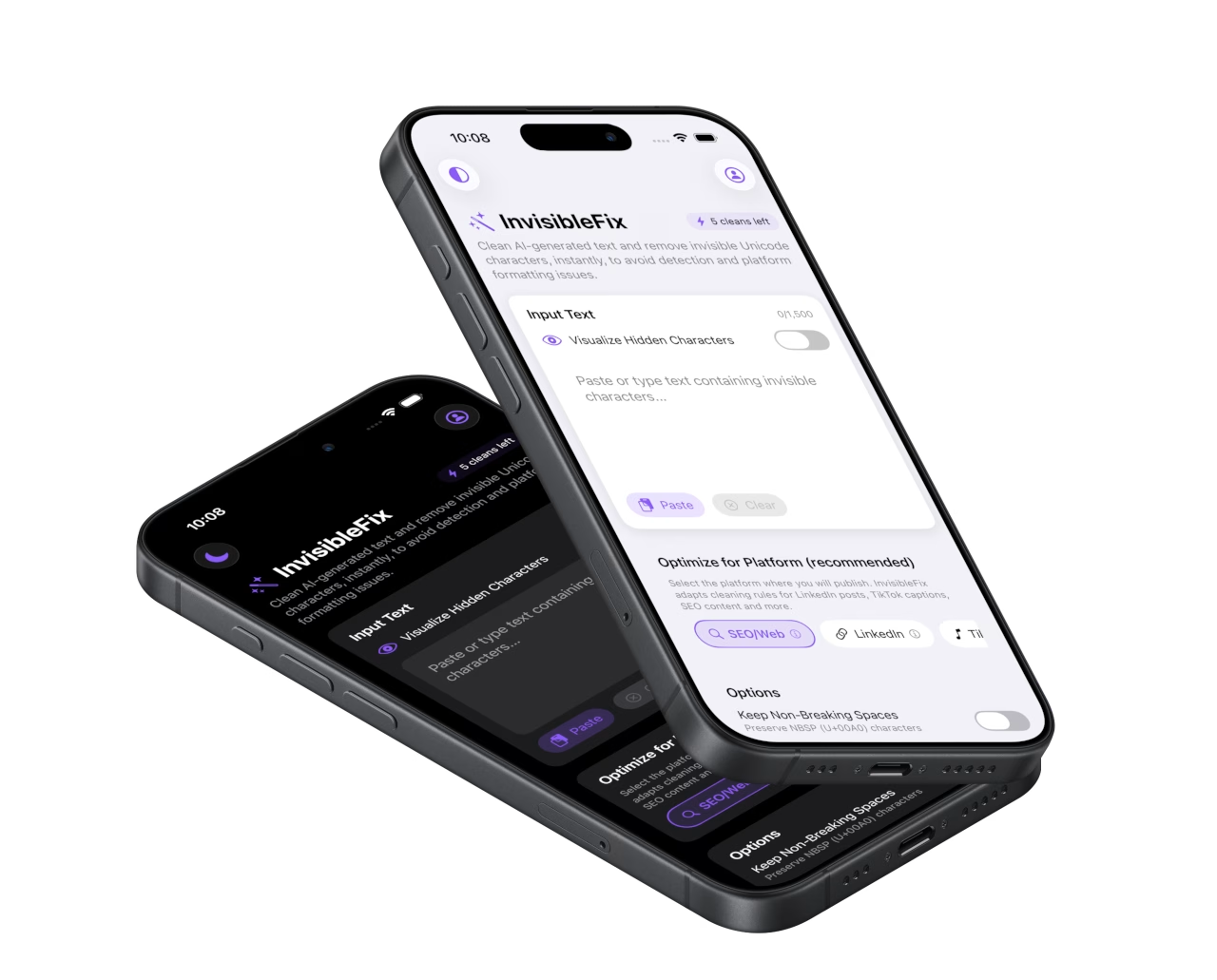
A stable workflow applies controlled normalization after editing and before publishing. This preserves intent while preventing breakage in wrapping, parsing, and truncation. Local-first normalization keeps drafts private while removing unintended artifacts that cause failures. For immediate cleanup, use app.invisiblefix.app. For a repeatable baseline, see Unicode hygiene checklist.
Deep dives
The following articles expand on transport behavior, copy-paste instability, and why invisible Unicode becomes visible failure downstream: