Clean AI-generated text
Cleaning AI-generated text is not about rewriting content. It is about removing invisible structure that changes how text behaves once it is published. AI output can look correct in the interface where it is generated, then break after copy-paste. Wrapping fails, truncation triggers early on mobile, hashtags stop being recognized, and spacing becomes inconsistent across platforms.
These failures are rarely caused by wording or style. They are caused by invisible Unicode artifacts transported through rendering layers, clipboard representations, and platform parsers. Cleaning AI-generated text standardizes the underlying structure so that the visible content behaves predictably across devices, editors, and publishing surfaces.
Cleaning is defined, the most common artifact families are identified (NBSP, zero-width marks, hidden formatting residue), and their main failure modes are mapped (wrapping refusal, broken hashtags, early truncation). Safe normalization patterns are provided for publishing workflows where predictable behavior matters more than preserving invisible layout rules.
What it is
Cleaning AI-generated text is controlled normalization applied to AI output before publishing. The goal is to remove unintended invisible Unicode artifacts and standardize whitespace while preserving meaning, emoji integrity, and multilingual behavior. This is not paraphrasing. It is structural hygiene that makes AI text behave like clean text everywhere it is pasted.
In practical terms, cleaning targets invisible artifacts that change behavior: non-breaking spaces that remove line breaks, zero-width characters that split tokens invisibly, and hidden formatting residue introduced during rendering and clipboard transport. These characters are valid Unicode, which is why platforms store them and interpret them even when authors cannot see them.
Why it happens
AI-generated text is usually produced outside the destination platform. It is rendered in a chat interface optimized for readability, then copied into a CMS, social composer, or mobile app. Each step introduces a layer where invisible structure can be preserved or introduced. The longer the pipeline, the more hidden states the text can carry.
Copy-paste is the most common boundary where invisible artifacts cross into publishing systems. The clipboard can carry multiple representations of the same content, and the destination platform chooses what to consume. This selection can preserve invisible characters that were harmless in the source context but disruptive in the destination.
Rendering and formatting layers
Chat interfaces often apply markdown conversion, typography rules, and spacing normalization. These transformations keep output readable but can involve non-standard whitespace or invisible separators. When copied, the hidden structure moves with the text.
Clipboard representations
The clipboard often contains plain text and richer attributed representations at the same time. The destination chooses what it prefers. That is why the same AI-generated text can behave differently across apps even when it looks identical.
Common symptoms
Cleaning becomes necessary when text looks normal but fails behaviorally. The most common symptoms include headings and captions that refuse to wrap, early truncation in mobile feeds, hashtags and mentions that stop being recognized, and inconsistent spacing in previews or snippets. These issues often appear inconsistently, which makes them difficult to debug without a structural cleanup step.
Why the symptom is amplified on mobile
Mobile layouts are narrower and truncation triggers earlier. A single non-breaking space can remove a critical break point. A zero-width boundary can alter tokenization just enough to change truncation behavior. Hidden structure has less room to hide on mobile, so failures become visible faster.
How to detect it
Invisible artifacts are difficult to detect because editors hide them by design and find-and-replace cannot reliably target “nothing”. Reliable detection requires revealing special whitespace in a code-aware editor, inspecting Unicode code points, or using a cleaning step that normalizes text predictably without manual inspection.
Method 1: reveal special whitespace
Some editors can display NBSP and control marks with distinct symbols. This is useful for diagnosis, but not scalable for high-volume publishing workflows.
Method 2: inspect code points
Code point inspection confirms whether suspicious spaces are U+0020 or U+00A0, and whether zero-width characters are present. This is the highest-confidence method, but it adds friction.
Method 3: symptom-driven validation
When a hashtag stops registering or a line refuses to wrap in a narrow container, invisible artifacts are likely. The signal becomes stronger when the source is a chat interface, Docs, PDFs, or rich web pages.
How to fix it safely
Safe cleanup requires controlled normalization. Not all invisible Unicode is unwanted. ZWJ is required for many emoji sequences. Directional marks can be legitimate in mixed-script contexts. A safe workflow removes unintended artifacts that cause breakage while preserving required characters for meaning and rendering.
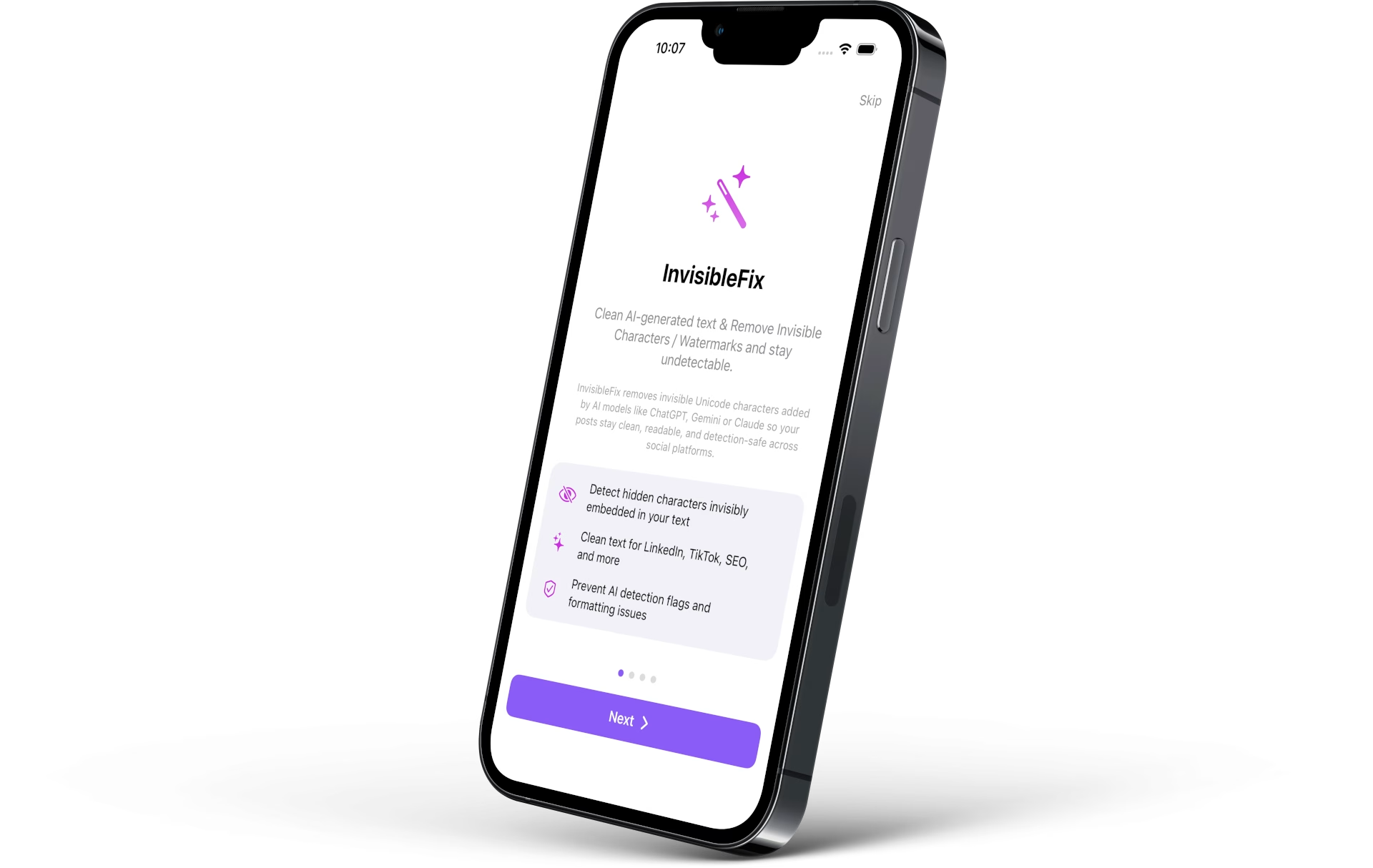
For publishing workflows, predictable behavior usually matters more than preserving invisible layout rules. This is why cleaning is best applied after editing and before publishing. The process is detailed in Normalize AI text before publishing. For immediate cleanup, text can be normalized locally in the web app at app.invisiblefix.app.
Once AI-generated text is cleaned, it behaves like any other well-structured text: wrapping becomes flexible, parsing becomes reliable, and publishing becomes repeatable across platforms.
FAQ: clean AI-generated text
What does cleaning AI-generated text mean?
Why does AI-generated text need cleaning?
Does cleaning change the meaning of text?
Can cleaning break emoji or languages?
What is the fastest way to clean AI text?
AI text deep dives & workflow notes

 Invisible Fix

